
How Our Snow Pack Impacts Summer River Flow Levels
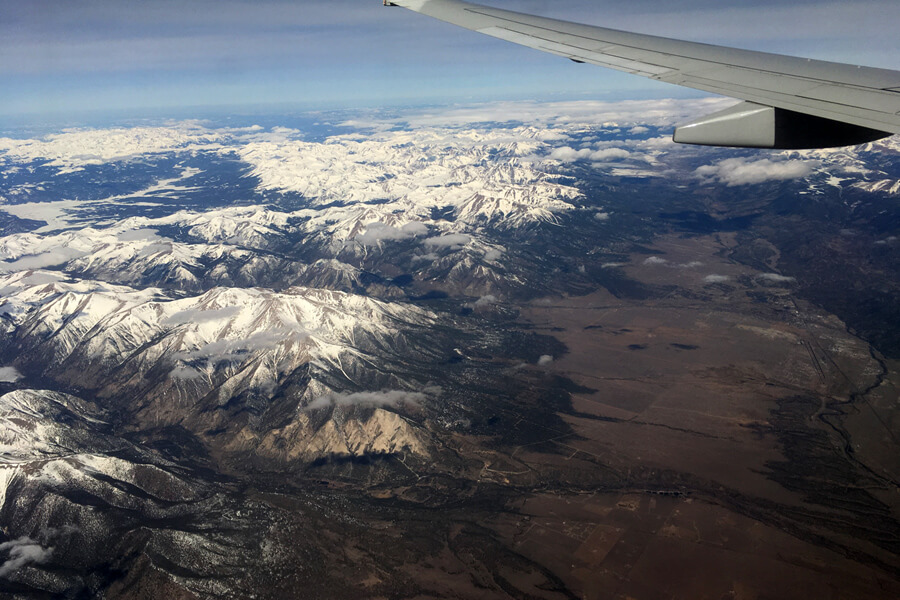
Ever wonder how our winter snow influences the river? During the winter the snow doesn’t do too much for our water levels. However, as the temperature rises in the springtime, runoff and stream flow in the river is directly attributed to melting snow and ice. Mountains like the Collegiate Peaks surrounding Buena Vista act as natural reservoirs, storing precipitation from the cooler season, we call this phenomenon “Snow Pack”. As the name implies, this is literally the amount of snow packed at the top of the mountains that melts during spring and summer to feed our rivers. Up to 75% of water supplies in the western United States are derived from snowmelt, so this snowpack levels are certainly worth noting when planning your whitewater rafting vacation. Water levels rise dramatically when we enter the summer rafting season because the snowmelt is making its way down the mountains and into our rivers. This is what accounts for the wide range in CFS. Snowmelt can cause nearly all of the stream flow in a river. If you ever are visiting us in the winter, you’ll notice even sections known for their rowdy rapids like The Numbers seem pretty easy going this time of year. Since the Arkansas River headwaters are located just north of us in Leadville, we see the direct impact of varying snowpack levels year over year. The better the winter, the better the rafting! Typically mid to late June sees the highest water levels. Last summer we enjoyed an incredible high water rafting season and with the historic amount of snow we received this winter, we are eagerly awaiting the Memorial Day opening of our season! Don’t miss out this summer – secure your trip today by giving us a call at 1-800-IN A RAFT (1-800-462-7238) or book your whitewater rafting now online!
Featured Trip: The Arkansas River Dinner Float
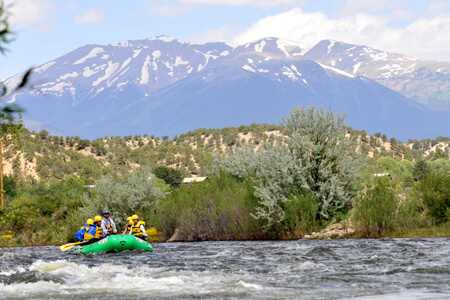
Published: May 19, 2017 | Updated: February 2026 Looking to sneak in a little time on the Arkansas River that everyone from your preschooler to Grandma can enjoy? If you’re searching for a gentle introduction to the water without the intensity of big rapids, our exclusive Arkansas River Dinner Float Trip is the perfect solution. Known among local “River Rats” as the Milk Run, this trip takes you on a mellow, easygoing portion of the river. Showcasing some of the best views of Mt. Princeton and Mt. Yale, this float features Colorado mountain scenery at its finest. A Beginner-Friendly Experience This 3.5-mile journey is perfect for wrapping up a summer day or easing into Arkansas River rafting if you are new to the scene. With its laid-back pace compared to more aggressive sections like The Numbers, the Milk Run is extremely beginner-friendly. It is perfectly suited for those who would rather take in the 14,000-foot peaks of the Sawatch Range than charge through adrenaline-inducing rapids. To make it even more relaxing, we mount the boats with oars—this means our professional guides take care of all the paddling while you focus on the views and your family. Dinner with a View in Buena Vista The trip wraps up perfectly at the Riverside Bar & Grill, home to the best fish tacos and margaritas in Buena Vista. You can relax and leisurely enjoy dinner as the sun sets over the mountains. This experience is unlike any other and is sure to be one of the most memorable meals of your Colorado vacation. Is the Arkansas River Dinner Float safe for small children? Yes, the “Milk Run” section of the Arkansas River is classified as Class I-II (mellow water), making it safe for children as young as 3 or 4 years old. Because the guide handles the rowing, parents can focus entirely on their children while enjoying the scenery. What should I wear for a scenic dinner float? Since this is a splash-free scenic float, you don’t necessarily need a wetsuit. We recommend comfortable outdoor clothing, a light jacket for when the sun goes down, and sandals or shoes you don’t mind getting a little damp. Where does the Arkansas River Milk Run start and end? The Milk Run starts just south of Buena Vista and winds through the valley for 3.5 miles. Our dinner float specifically concludes at the Riverside Bar & Grill, allowing for a seamless transition from the boat to your dinner table. Yes, the “Milk Run” section of the Arkansas River is classified as Class I-II (mellow water), making it safe for children as young as 3 or 4 years old. Because the guide handles the rowing, parents can focus entirely on their children while enjoying the scenery. Since this is a splash-free scenic float, you don’t necessarily need a wetsuit. We recommend comfortable outdoor clothing, a light jacket for when the sun goes down, and sandals or shoes you don’t mind getting a little damp. The Milk Run starts just south of Buena Vista and winds through the valley for 3.5 miles. Our dinner float specifically concludes at the Riverside Bar & Grill, allowing for a seamless transition from the boat to your dinner table.
Top Three Reasons to go Whitewater Rafting This Mother’s Day
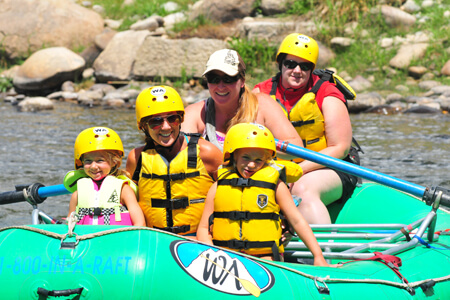
This Mother’s Day, treat Mom to some quality family time you are all sure to remember. Here are our top 3 reasons to go whitewater rafting this Mother’s Day! Top Three Reasons to go Whitewater Rafting This Mother’s Day 1. Quality Family Time Whitewater rafting requires your family to disconnect from everything else and focus on each other. The moment your green raft pushes off the shore, your world is transformed into an ecosphere consisting solely of t hat green raft and the destinations it leads you. Whether your family is admiring the gorgeous glow of sunset on the canyon walls or settling into your groove as your synch up and power through a wave train, rafting will engross you enabling the opportunity to connect without the distractions of any screens – every mom’s dream. The river makes an ideal setting for creating new memories to share and soaking in the breathtaking Colorado scenery. 2. Rejuvenating Mom will feel inspired after basking in the Colorado sunshine and completely disconnecting from the daily grind. Whether on one of our multi-day whitewater rafting trips or a half-day trip, spending time on the water will refresh the senses. The opportunity to connect with remote wilderness areas and take in natural landmarks like Browns Canyon National Monument brings a new perspective and appreciation for nature. 3. Fun! There is nothing quite like the endorphin rush from paddling through giant rapids or the build up of butterflies in your stomach followed by the thrill of plowing over a wave. Whitewater rafting is an absolute blast and our trips include a variety of options sure to please the class IV big water junkies and the more casual rafter in search of a sightseeing float. No matter the trip, time on the water is sure to put a smile on everyone’s face. Bonus: Mom will come away from the trip feeling empowered knowing she toughed it out on the river. And, if she’s still craving that spa experience, Buena Vista just so happens to boast some incredible natural hot springs!
Featured Stretch of River: Royal Gorge
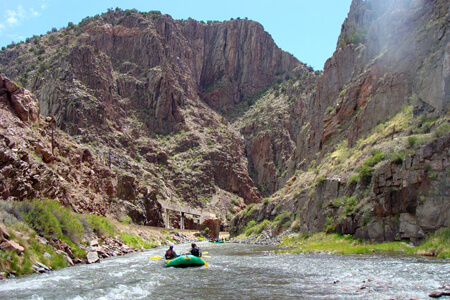
Ask our guides what their favorite stretch of Class V rafting is along the Arkansas River and chances are they’ll say the Royal Gorge. Known for its iconic history and fast flows, whitewater rafting through the Royal Gorge is a guaranteed fun time! Just an hour south of Colorado Springs you’ll find some the hottest action the Arkansas River has to offer. It’s a genuine toss up among whitewater aficionados over which section is better – The Royal Gorge or The Numbers. Personally, I find each one so unique that it’s impossible to decide. (If you’re finding yourself in a similar situation, check out our trip that features both: 2 Day Arkansas River Extreme) Our Royal Gorge trips start a bit differently than the other whitewater rafting trips we do on the Arkansas River. Rather than meeting in our Buena Vista office, you’ll meet up with your guides in nearby Cañon City. After gearing up, we put in just above the start of the Royal Gorge at Bighorn Sheep Canyon. The fun starts immediately with Sunshine Falls a splashy rapid requiring some technical paddling during high water conditions. Entering the Royal Gorge and looking up at the 1,250 foot granite cliffs showcases Colorado geology, history, and simply beauty at its finest. The layers of rock were carved away by the Arkansas River to create the Royal Gorge as we know it today over a period of 3 million years. A relic from Colorado’s Wild West Days, you’ll notice railroad tracks laid out in 1878. Originally built by the Denver and Rio Grande Railroad company after two years of guerilla warfare against Santa Fe Railroads, these tracks are still in use today by the Royal Gorge Route Railroad. As we continue on just past Wall Slammer, a class V that gives me butterflies everytime we pass through, the 955 foot high suspension bridge towers above us. Built in 1929, the bridge held the world record for highest bridge until 2001. Looking up at this moment is always my favorite – it’s such a unique perspective. Very few of the Royal Gorge’s annual 500,000 visitors get the opportunity to enjoy their experience via raft! My favorite time of year to raft the Royal Gorge is early summer (May/June) because of all the secret waterfalls that reveal themselves after spring rains. The juxtaposition of jagged granite cliffs and lush greenery surrounding the waterfalls is absolutely breathtaking. Mid June – July brings high water rafting season making the rapids even more intense and then in August, things mellow out again returning to early summer flows.Regardless of when you visit, the Royal Gorge is also a popular spot for spotting mountain goats and bighorn sheep. I’ve had the best luck spotting them after Lion’s Head Rapid. If you got a taste of the Arkansas River and are craving a new flavor, I highly suggest checking out the Royal Gorge. It has a very unique feel and is a personal favorite. Check out all of the options for our Royal Gorge rafting adventures here!
Colorado Adventures: How to Spot a Bald Eagle
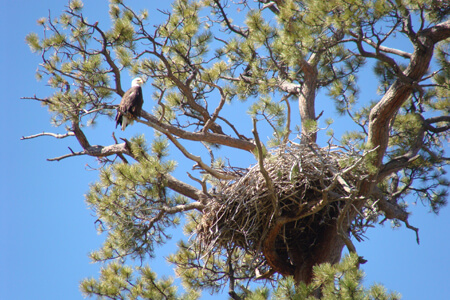
Spotting a bald eagle is one of the coolest things about an adventure on the river! We’re sharing what to look for – and some of the best ways to access Colorado’s bald eagle hotspots. Few things can replicate the majesty of a bald eagle in flight. Some travelers on river adventures are lucky enough to spot a bald eagle in its natural habitat – definitely the memory of a lifetime! With only 78,000 birds in the wild, bald eagles a rare sight; however, thanks to conservation efforts, they’re making a comeback throughout North America, so your chances to see one a better than ever these days. This is especially true here in Colorado.The state is part of a major bald eagle migratory route so if you go at the right time of year, you’ll have a great chance to see them in action. Whether you’re an avid birder or just want to catch a glimpse of America’s most iconic national symbol while you’re floating along on one of our trips, this article will teach you how to identify bald eagles, plus give you some tips on how to spot them. Know What to Look For: Appearance and Characteristics Everyone can picture what a bald eagle looks like: the large brown body, yellow beak, and signature ivory head and tail feathers. Surprisingly enough, the picture in your mind may not be that helpful when it comes to spotting them in the wild. Like many birds, bald eagles’ plumage changes as they age. When the birds are juveniles, they don’t even have the iconic “bald” white head; for their first year of life, a bald eagle’s head is brown. Bald eagles don’t develop the brown and white plumage they are so famous for until they’re actually four years old, but that doesn’t make seeing younger birds any less spectacular. At youth, bald eagles begin with dark brown bodies and heads. In their second year, the feathers over their belly lighten. In their third year, the belly begins to darken as the head lightens, getting it closer to the final appearance, which it develops by its fourth year. The feet and beak consistently transition from dark to bright yellow by the time the bird is four. Tail feathers, however, are not a great indication of a bald eagle. They tend to differ bird to bird, and can closely resemble those of other species of eagles. Studying a bird identification guide is a great way to prepare for your outing. If you can, memorize how the eagle looks at each stage of its development before you hit the water. This way, you’ll know the eagle right when you see it, rather than fumble with a bird guide and missing the sighting. Getting the Timing Right Regardless of what month you go, there are certain times of day when bald eagles are most active. Bald eagles are not out much in the middle of the day. For the best viewing opportunities, go early in the morning, or late in the afternoon. Don’t leave it too close to sunset though, because you’ll need good lighting to see the birds. Bald eagles are highly wary of humans, so you won’t be able to get very close. Spotting a Bald Eagle on a Colorado Whitewater Rafting Adventure A rafting adventure is a great way to get your adrenaline fix in while also getting a chance at spotting a bald eagle its natural habitat. Since bald eagles rely on fish for their main source of food, they tend to stick close to water sources. We offer a number of rafting trips that take you into the heart of Colorado wilderness – bald eagle’s prime territory. Our Arkansas River Dinner Float is a popular family choice, as it is easy rafting for all skill levels. The Arkansas River is frequented by bald eagles so you have a good chance of catching a glimpse. Plus, we set out right before the golden hour, which is prime time for bald eagles while still being light enough to see clearly. Or, if you’re interested in more of a thrill, consider one of our full day or multi-day excursions. The 3 Day Arkansas River trip, for example, takes you down 68 miles of beautiful river. The long trip and isolation from populous urban areas mean you’ll have plenty of chances to see the people-shy bald eagle. While you’re at camp, you’ll have a much better chance of seeing the eagles during their busy times: morning and late afternoon. Imagine being treated to the sight of a bald eagle swooping down on the water to catch a fish, roosting in the trees on the water’s edge, or soaring high overhead as you float down the beautiful rivers of Colorado. With a Colorado rafting adventure, this can be your reality! Not much of a water person? If want a way to see bald eagles without having to get in a boat – we also offer horseback riding trips. You’ll be riding through the eagle’s natural habitat, as we follow a trail along Chalk Creek. Another perk for bald eagle enthusiasts – some of our horseback riding trail packages are available throughout the winter. This means you could come explore Colorado when over 1,000 bald eagles visit for their annual migration, significantly raising your chances of a sighting. Preparing For Your Colorado Whitewater Rafting Adventure Now you know how to spot a bald eagle in the wild, as well as when and where to go. The rivers of Colorado – prime bald eagle habitat – are also sites of unspoiled natural beauty the whole family can appreciate. We would be happy to speak with you and give you tips on how to plan your trip. Our knowledgeable guides have the firsthand experience to ensure that your timing and choice of river will give you the best shot at seeing a bald eagle on your next adventure. Get on touch with us today to see how
Featured Post: Upper Colorado River
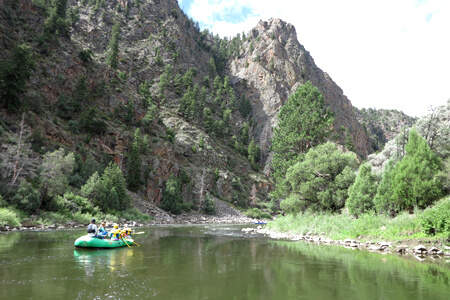
Lusting for some whitewater fun, but feeling a little intimidated by the class III-V rapids found on our Arkansas River options? No worries – our Upper Colorado River trips are the perfect solution! Featuring a handful of splashy class II rapids, unique pit stops for historical and natural landmarks, and an endless supply of gorgeous scenery, Little Gore Canyon along the Upper Colorado River is a family favorite. Just an hour’s drive south from Rocky Mountain National Park, this trip is a great option to tack onto your Colorado vacation adventure. What makes the Upper Colorado River so great? Family Friendly The Upper Colorado’s Little Gore Canyon is known among river rats for beginner-friendly, easy paddling. If you’re looking for a whitewater rafting adventure to accommodate both your 4 year old and Grandma, search no more – you found your trip. Little Gore Canyon provides the perfect balance of beautiful Colorado country scenery and fun class II rapids like “Eye of the Needle” and “Yarmony”. We offer a single day trip and a two day camping + rafting option. Since this stretch of water is so easygoing, we bring along inflatable kayaks (affectionately known as “duckies”) and invite guests to cruise independently alongside the raft. This is a unique experience from our other advanced whitewater trips and lets guests take full control of their adventure. If you’d rather chill and take in the sightseeing, that works too. Whatever the mood, the versatility of our Upper Colorado rafting trips can cater towards your preferences ensuring the experience of a lifetime. Location The Upper Colorado River is considered an “away river” for us, meaning we meet y’all at the put in with rafts, rental gear, and everything else rather than you coming to our headquarters in Buena Vista. If you’re in the Northern half of Colorado and want to go rafting, this trip is a very convenient option. Unique Features Our seasoned guides know the secret spots to eddy out and take in all of the resources along this section of the Colorado River. For example, you can pamper those paddling muscles with a soak in natural hot springs found alongside the river. Not too far from our put in, is an abandoned mining cabin. This well preserved historical landmark is a fascinating peek into Colorado’s early days and can only be accessed via raft. Another favorite pit stop is to view petrified dinosaur footprints. The short hike to this site provides a nice little break to stretch your legs and is very popular with kids. Wildlife + Scenery If you’ve been on one of our Browns Canyon National Monument or Royal Gorge whitewater rafting trips you’ll notice a big difference in terms of “paddler engagement” with this river. In other words, there is plenty of mellow downtime between rapids for appreciating the wildlife and scenery on the Upper Colorado River. This is perfect because Little Gore Canyon is a bald eagle hot spot – they love building their nests here. The dramatic canyon cliffs contrast with lush rolling hills and rural ranches providing an ample taste of Colorado’s natural beauty. If you’re on the hunt for a family friendly trip with a sprinkle of whitewater rapids to keep the adrenaline flowing and some bonus detours, look no further! Little Gore Canyon on the Upper Colorado River is calling your name – give us a ring at 1 800-IN-A RAFT (1-800-462-7238) or book here (link to trips) and make it happen!
Is a Rafting Trip a Luxury Vacation?
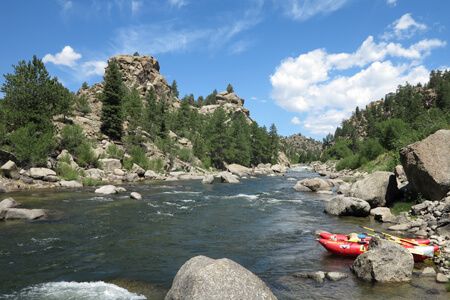
Vacations are the ultimate luxury and while whitewater rafting doesn’t traditionally fall into the luxury bracket, here at WA we strive to prove otherwise. Imagine wiggling your toes in the soft golden sand as you hear the gentle crash of waves along the shore. You smile to yourself, taking in the savory scent of carne asada sizzling on the grill and admiring the gorgeous colors of the sunset illuminating the sky as it disappears over snowcapped mountains. Wait, mountains? Shouldn’t it be palm trees? Where exactly are we? Well, glad you asked – we are deep in the heart of Browns Canyon National Monument, approximately 17 miles away from Buena Vista, Colorado making camp for the first night of a three day whitewater rafting adventure. For whatever reason, the thought of camping along a river in Colorado wouldn’t naturally strike people as a glamorous vacation, but I beg to differ. There is a surprising amount of luxury to be found while “roughing it” in the wilderness. Here at Wilderness Aware, you’re taken care of the moment you step into our headquarters. Our goal is to provide guests with the ultimate VIP experience. We’re the only company in the Arkansas River Valley to offer a complimentary continental breakfast before trips and the amazing service certainly keeps coming as you make your way to the water. Our experienced guides cover all the details so you can simply focus on enjoying your whitewater rafting adventure with your friends and family. If you’ve never rafted with us, you might be wondering what these “details” involve. Forget your sunscreen? We gotcha. Need an extra layer that won’t get cold when wet? No worries. Little Sister wants one too? Not a problem! Each raft is prepped with a drybag ready to save the day should weather conditions change – you’re also welcome to keep small valuables safely tucked in here (just ask your guide!). If you’re joining us on an multi-day overnight adventure, we have drybags available for each guest so you can keep your belongings safe from the elements. First time campers or those traveling by plane don’t need to worry about camping gear because we offer rental gear you can pick up right at our office before your trip. We also have cold weather river gear like booties, splash tops, and wetsuits available to keep you comfortable on the water. A key component to any WA trip is the food! We’re all about fine dining along the river. On our full day trips, guides set up a complete deli sandwich station for guests. We’re happy to accommodate vegan, gluten free, or any other dietary requests so there’s no need to worry about getting hungry. Our multi-day trips allow for more creativity – a sample dinner menu might be our signature pesto bread bowl dip appetizer, fajitas will all the fixings, and a chocolate cake baked fresh on the spot (our guides are pros when it comes to working a Dutch oven 😉 ). Mornings start with freshly brewed coffee, tea, or hot chocolate waiting outside your tent in a keepsake travel mug. While guides are busy scrambling up some eggs and frying the bacon, I invite you to take advantage of being immersed in nature and stroll along the river bank. Watching the world around you wake up is a pretty magical way to start your day of a thrilling Colorado white water rafting adventure! Trade those high thread-count Egyptian linens and spa services for the thrill of splashing through a wave train, cozying up in a sleeping bag, and if you’re really craving the spa scene – be sure to check out the nearby hot springs; nature’s ultimate solution when you’re craving some TLC. This summer, take on the adventure of a lifetime and give whitewater rafting in Colorado a try!
Rio Marañon #10: Dams and Regrets
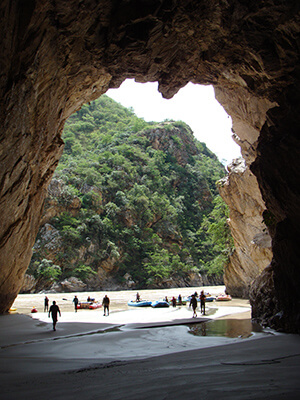
Mid-morning on New Year’s Day, we arrived at Amazon Cavern, which is reminiscent of Redwall Cavern in the Grand Canyon on the Colorado River. It is a sandy-floored alcove big enough for a crowd of people to play Frisbee in, but the rock is igneous and dark, instead of the red sandstone of Redwall Cavern. The floor of the cavern was wet due to the fluctuation of the free-flowing Rio Marañon water levels. It was spectacular and humbling, dwarfing us with its gigantic proportions. It is also the site of another proposed dam. I found it beyond reason that anyone could look at this cavern and think only of submerging it underneath a reservoir. How could their senses be so deadened to the millennium of natural effort from flowing water and sand required to create this masterpiece? Building a dam here would be akin to giving a child a Rembrandt to paint over with finger paints.There is something special about being part of a living river ecosystem; something healing. But a river ecosystem isn’t just an emotionally nourishing place for people. It serves an important role in planetary health, as well. That role requires a flowing river that carries silt downstream to replenish jungle and marsh nutrients, supports fish populations and forests, and provides homes for thousands of interdependent species. Damming that flow causes huge environmental impacts. According to Sierrarios.org (2015), “In 2010 then-president Alan García signed a pact with Brazil to provide thousands of MW of hydropower for export, declaring the damming of the Marañon ‘in the national interest’.” Twenty dam projects, if constructed, will stop the effective flow of the Rio Marañon: “one hydro dam is planned after another for the entire length of the river in the Andes, leaving little or no free-flowing river” (Sierrarios.org, 2015). The sole purpose of this agreement is to provide hydropower; there is no benefit for residents along the river. Thousands of people will be displaced by the dams, and the ecosystems of the Amazon basin will be irreparably damaged. The Rio Marañon is the primary source by volume of the Amazon River. It nourishes the Amazon jungle; it is an artery of the largest rain forest in the world. The proposed dams will further impact the already beleaguered rain forest, altering world climate, food sources and biodiversity. There are important lessons that need to be learned from previous large dam projects around the world. The Three Gorges Dam on the Yangtze River in China provides a stark example. After denying impacts from the dam for decades, “Chinese officials staged a sudden about-face, acknowledging for the first time that the massive hydroelectric dam, sandwiched between breathtaking cliffs on the Yangtze River in central China, may be triggering landslides, altering entire ecosystems and causing other serious environmental problems—and, by extension, endangering the millions who live in its shadow” (Hvistendahl, 2008). Besides repeated landslides, impacts include increases in waterborne disease, declines in biodiversity, and the serious possibility of major earthquakes along fault zones underneath the reservoir. In addition, “the dam further imperils delicate fish populations in the Yangtze” (Hvistendahl, 2008). The dam has even changed climate patterns: “When officials unveiled plans for the dam, they touted its ability to prevent floods downstream. Now, the dam seems to be causing the opposite problem, spurring drought in central and eastern China” (Hvistendahl, 2008). Then there is the intrinsic value of a place like the Rio Marañon, and an ethical choice about what we will leave for future generations. In the United States, 75,000 dams obstruct the flows of rivers. Glen Canyon dam on the Colorado River has sparked a great sense of loss among environmentalists and nature lovers, because it flooded one of the most spectacular and rare canyon systems in the desert southwest. Even former Bureau of Reclamation head Daniel P. Beard recently called the construction of Glen Canyon dam “an historic blunder of monumental proportions” (Trenbeath, 2015). Hetch Hetchy dam in California also flooded an irreplaceable treasure equal to the Yosemite Valley, a tragedy still being mourned a century later. Yet, government leaders in Peru and Brazil have never traveled along the Rio Marañon; they have no idea what a rare jewel they are about to destroy. And they do not understand how wide ranging the environmental repercussions caused by the dams will be to the Amazon basin. If they did, perhaps they would reconsider. How many more of earth’s spectacular places must fall before we decide to protect those that remain? There are so few left. At this point, it is up to the people of Peru and around the world to get the attention of the governments of Peru and Brazil, and show them what is at stake. SierraRios is working to raise awareness about the predicament of the river, and is working to unify the tribes and villagers along the river’s banks in outspoken opposition to these ill-conceived dams. We witnessed the empowerment of the people in Tupén Grande and Tutumberos, and by rafting with SierraRios we became part of the effort to continue spreading the word. There is much work still to be done. Although the Chadin II office is currently closed, there is every indication that it will reopen after the April election, and that development of the dams will continue. Hydropower projects have a limited lifespan, and there are other less environmentally destructive ways to generate electricity. But the impacts on the important ecosystem of the Rio Marañon will last forever. Peru has another alternative: The Rio Marañon can be protected as a Peruvian and worldwide treasure, generating ecotourism income for Peru, and preserving the environmental health of the Amazon basin for generations to come. To join the effort to save the Rio Marañon, or to visit the Rio Marañon yourself, contact SierraRios at www.sierrarios.org. Read more entries in our ten-part series about the Rio Marañon. References: Hvistendahl, Mara. March 25, 2008. China’s Three Gorges Dam: An Environmental Catastrophe? Scientific American. Retrieved from https://www.scientificamerican.com/article/chinas-three-gorges-dam-disaster/
Rio Marañon #9: The Jungle and Tutumberos
January 1, 2016 was our last day in the Grand Canyon of the Marañon. The original plan was to take out at Puerta Malleta, which we reached by mid-day, but we were three days early because of the high water levels. So we got a bonus added to our trip. We had time to float across the expansive Baguas valley and to spend a day in the true jungle of the Pongos section of the Rio Marañon. The Pongos jungle section has just recently been offered for rafting trips by SierraRios. In fact, just a day’s float beyond where we would end our trip, the tribes are still unfriendly to rafters, equating them with the engineering and study groups sent down to research dam sites. The tribes downstream were so angry that they were threatening to kill rafters that floated into their territory. On the sections of the Rio Marañon where we have floated, it has taken a great amount of work by SierraRios (especially Rocky Contos and Pedro Peña) to overcome the locals’ distrust of people in rafts and to convince them that we are on their side against the dams. The Baguas valley is broad and braided. It took a day and a half to cross it. Sometimes we would lose sight of each other for an hour at a time if we took different braided channels from one another. On the morning of January 3, the Rio Marañon was joined by two more rivers with similar volume to its own 20,000-30,000 cfs, and then the entire combined river squeezed into a narrow, jungle-lined canyon. The transition to full Amazonian jungle was dramatic and abrupt. The canyon walls were covered with thick vegetation, and we saw bright yellow and black Oropendula birds and their pendulous nests in the trees along the shore. A series of exciting rapids were normally encountered in this section of river (especially in September and October), but with the higher summer water levels of three rivers combined pushing through the canyon, most of the rapids were completely submerged. We floated serenely over rapid after rapid, viewing banana farms carved into the steep slopes of the canyon. Our one major rapid was scoutable and straight forward, providing huge standing waves including a set that gave sucker punches from both sides of the raft. We reached our destination by mid-day—the village of Tutumberos, home of the Awahun tribe. It was a rare sunny day in the jungle. We pulled our rafts into the eddy next to a small rocky beach shaded by huge trees and thick vegetation. Our host was Zecharias (clearly his western name), who was the leader of the dam resistance group for the village. He wore shorts, a t-shirt and a white plastic cowboy-hat-shaped helmet that could be strapped on for rafting. I am guessing his hat was a gift from another rafting group. Several of us wondered where we could get one like it—it was pretty cool. Zecharias was welcoming and very friendly, and led us through the jungle into his village and up the steep slope to his home, which was little more than a large palapa with a shack next to it. He introduced his wife, who shook our hands, and then they set up a long table outdoors among the chickens, where they fed us the traditional boiled chicken and rice lunch that we were becoming familiar with. We were grateful for the food and the hospitality, knowing that it took great effort to prepare, and that they had sacrificed their own chickens to the cause. SierraRios had paid the village for the meal, and each village we stopped at received a donation from part of our trip price. Zecharias brought out a large banner that read “Rio Marañon, vive sin represos” which means ‘live without dams’, and we all took a photo with the banner. We spent the afternoon wandering through the village, swimming at the local swimming hole, and striking up a soccer game between our young men and the village men and boys. That evening, the village kids came down to our camp on the beach. Steve held court on his red cataraft with a crowd of them, showing them gear and playing with them in the universal language of smiles and giggles that needs no translation. The kids hung around and watched Glen’s cook crew make spaghetti for dinner, clearly hoping to get the leftovers. We were glad to oblige them, but there was a small drawback. The cook crew had mistakenly used a can of salsa instead of spaghetti sauce, so the dinner was very spicy. When the leftovers were offered to the kids, they served themselves big plates full and sat down hungrily to eat. Within seconds, cries of “Agua! Agua!” echoed around the beach as the kids fanned their mouths, soon dissolving into fits of laughter. Pedro spent much of our visit talking to representatives of the resistance against the dams. He told us later that he was trying to set up a meeting between the different tribes along this part of the river, to unit them against the dams. The tribes bickered amongst themselves and that is why some of those further downstream wouldn’t let rafting trips pass through. By the time we left Tutumberos the next morning, Pedro had forged a meeting in the regional center, Celendin, for a couple of days later.That night, the chorus of jungle insect life was deafening. It was important not to leave your flash light on when you got into your tent or a large segment of the insect population would join you inside. And these were true jungle insects in the Amazonian tradition—inches long! I wondered how so many bugs could be out at night when I hadn’t seen any of them during the day. It was kind of creepy. But once inside our tent, insects vanquished, I slept well and deeply, serenaded by their song and comforted by the abundance of
Rio Marañon #8: Pools and Waterfalls
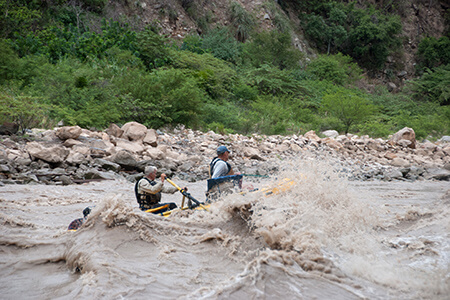
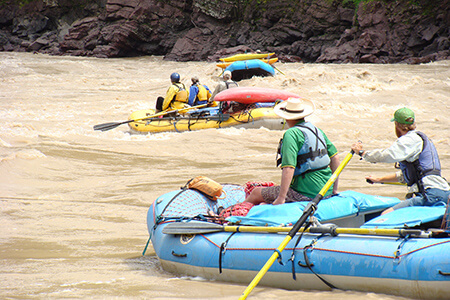
The river was coming up again. The morning we left Tupén Grande the water had begun to inundate the low area on the inland side of the beach. We launched our boats and floated 10 kilometers in 28 minutes! Logs and even fairly good sized trees floated by on the current now and then throughout the day. It was another big rapid day, with San Lucas the highlight for me as we stood our raft up on end in wave after wave that crested perfectly for us. We stopped for a hike up several hundred feet to a ridge where an array of ancient tombs commanded a spectacular view of the canyon. Most of the tombs were open and empty, but it was still a somber and important visit to a past time. Another highlight of this day, our ninth day on the river, was to pass through the Narrows, a calm but fast-flowing section between sheer cliffs that was the proposed dam site for the Chadin II dam. It was one of the most impressive places on the river in terms of sheer cliff walls. The idea that some see it only as a potential for dam construction and water impoundment left a sour feeling in my stomach; the gravity of such a crime was hard to fathom. The river continued to rise, and we weren’t able to scout any of the big rapids in the afternoon because the water covered the scouting routes. We ran Playa del Inca following Pedro’s verbal directions, and it was Joe’s favorite rapid because the waves came at us from every conceivable direction and gave us a terrific ride. Rapids filled the afternoon: the last one, Magdalena, delivering huge standing waves that left us all whooping. Day 10 was New Year’s Eve and the high water and huge rapids continued all morning. We rafted 30 kilometers by lunch time! The biggest rapid was Lin Lin, which we scouted for a long time. A huge boulder split the flow into a chaos of waves smashing into each other from bank to bank. As I walked back to the rafts, my heart in my throat, I met a Peruvian woman and her son, rushing down the shore to secure a vantage point from which to watch us run the rapid. She pumped my hand in both of hers, grinning broadly and babbling in Spanish. I wasn’t sure, but she might have offered up a prayer on my behalf. Then she and her boy hurried off, disappearing into the bushes. Despite my pre-rapid jitters, I couldn’t help but smile at her enthusiasm. Our running this rapid was probably the most exciting event they had experienced in a while. The oar boats had amazingly smooth runs down the right side between a huge rock and a couple of gigantic holes, while the paddle boat took the gonzo run down the crazy wave train against the cliff face on the right shore. A huge wave nearly flipped them, sending Rachel and Jane into the river, but the crew picked them back up within a few seconds and finished the rapid. Both women were fine; one paddle was lost to the river. Just before camp, when we stopped to collect firewood, Dude floated into an eddy further downstream from the rest of the group, and found the lost paddle; a gift relinquished by the Rio Maranon with the same steadfast benevolence she had shown us during the entire trip. We reached camp on another spectacular beach by lunch time. What was in store for us for this last afternoon of 2015 was one of the most beautiful highlights of the trip. After lunch we hiked up a creek drainage to a spectacular Eden of deep clear pools and waterfalls, stacked one upon the other up the side of a sloping granite face like a white satin ribbon studded with sparkling jewels. The granite slope on which this magical necklace lay was surrounded by lush green jungle forest, which had appeared along the river quite suddenly during the morning float. There were at least six pools connected by waterfalls, clear and warm and timeless. The view from the second pool looked out over the canyon, forest, and river, where large-winged Andean condors soared in ever-higher circles until they were just small black smudges on the cloud-studded blue sky. We swam and basked and pinched each other to make sure it was all real; we really were in the Amazon now! We lingered the rest of the afternoon. The perfect way to spend the last day of the year. Read more entries in our ten-part series about the Rio Marañon. To raft and/or help protect the Rio Marañon, contact SierraRios at www.sierrarios.org