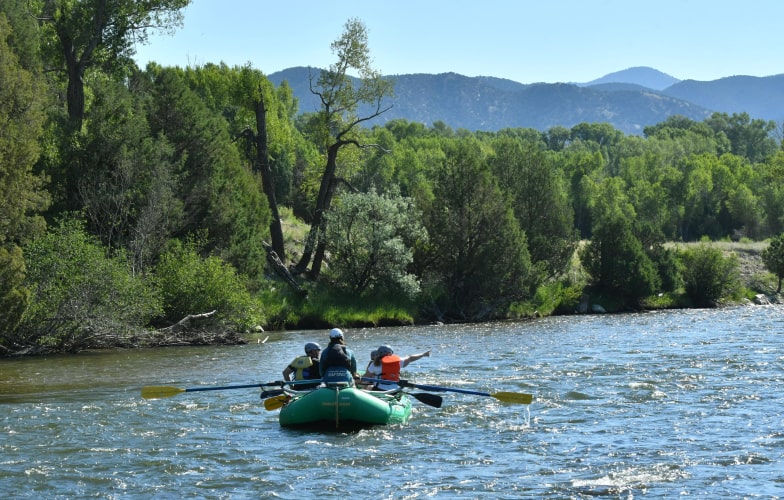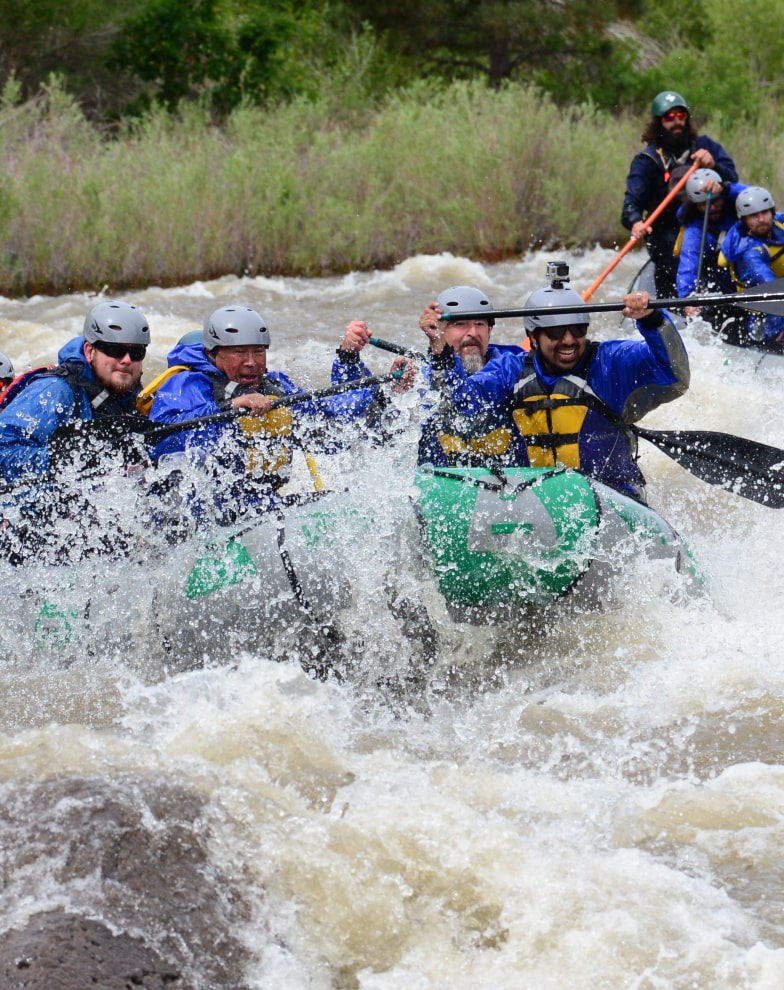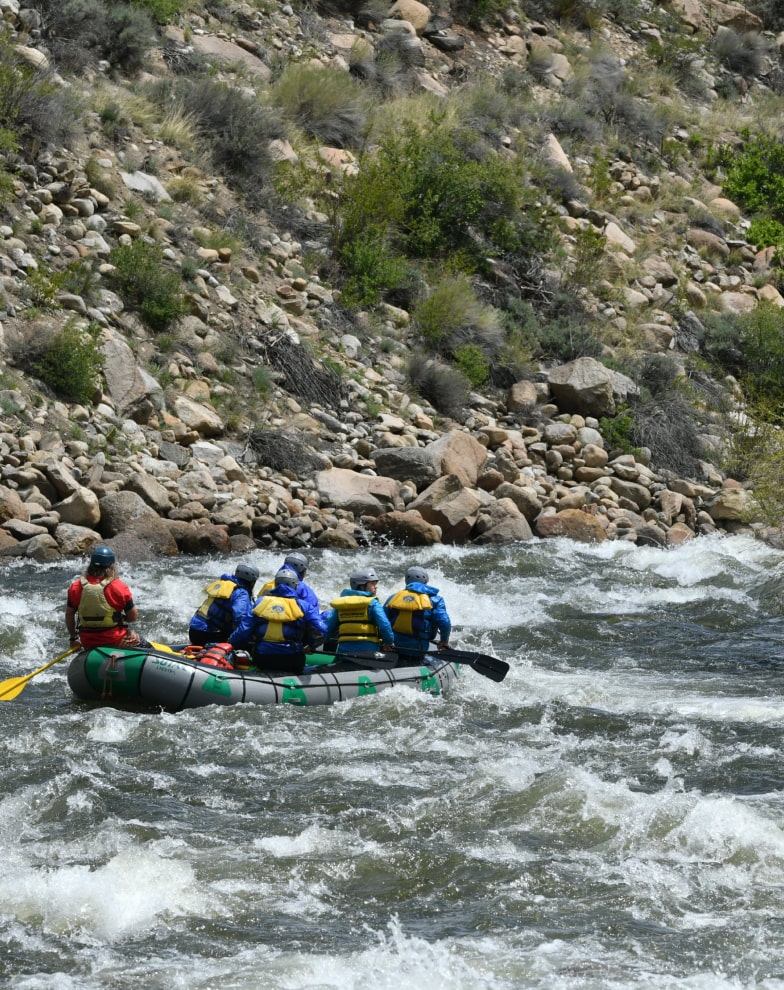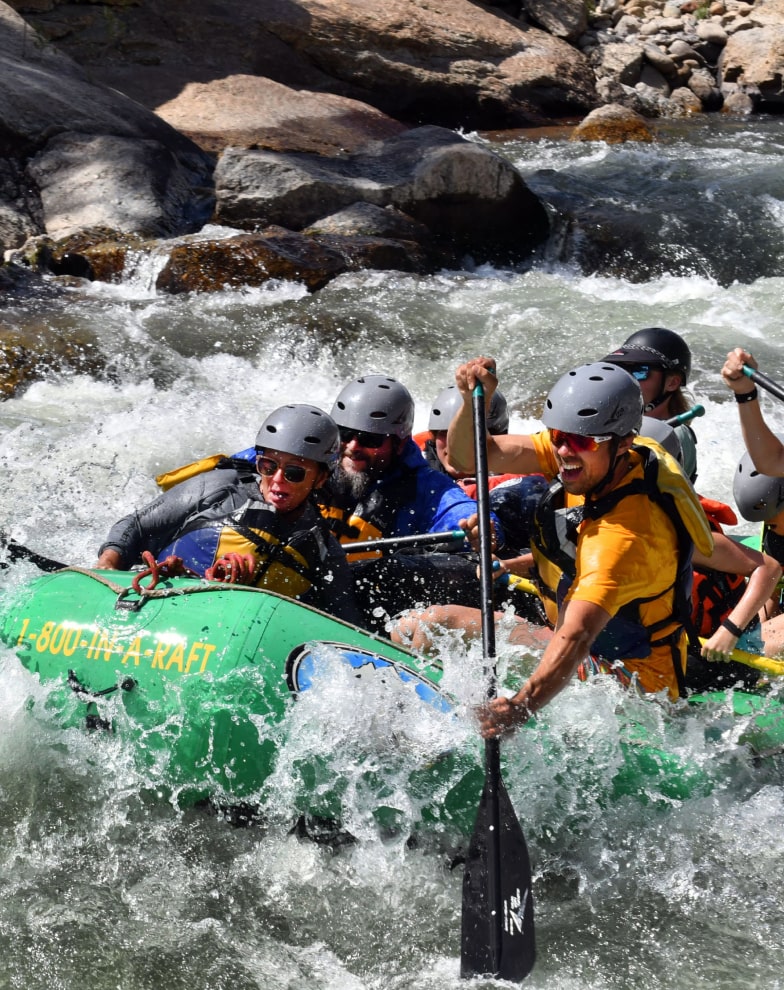
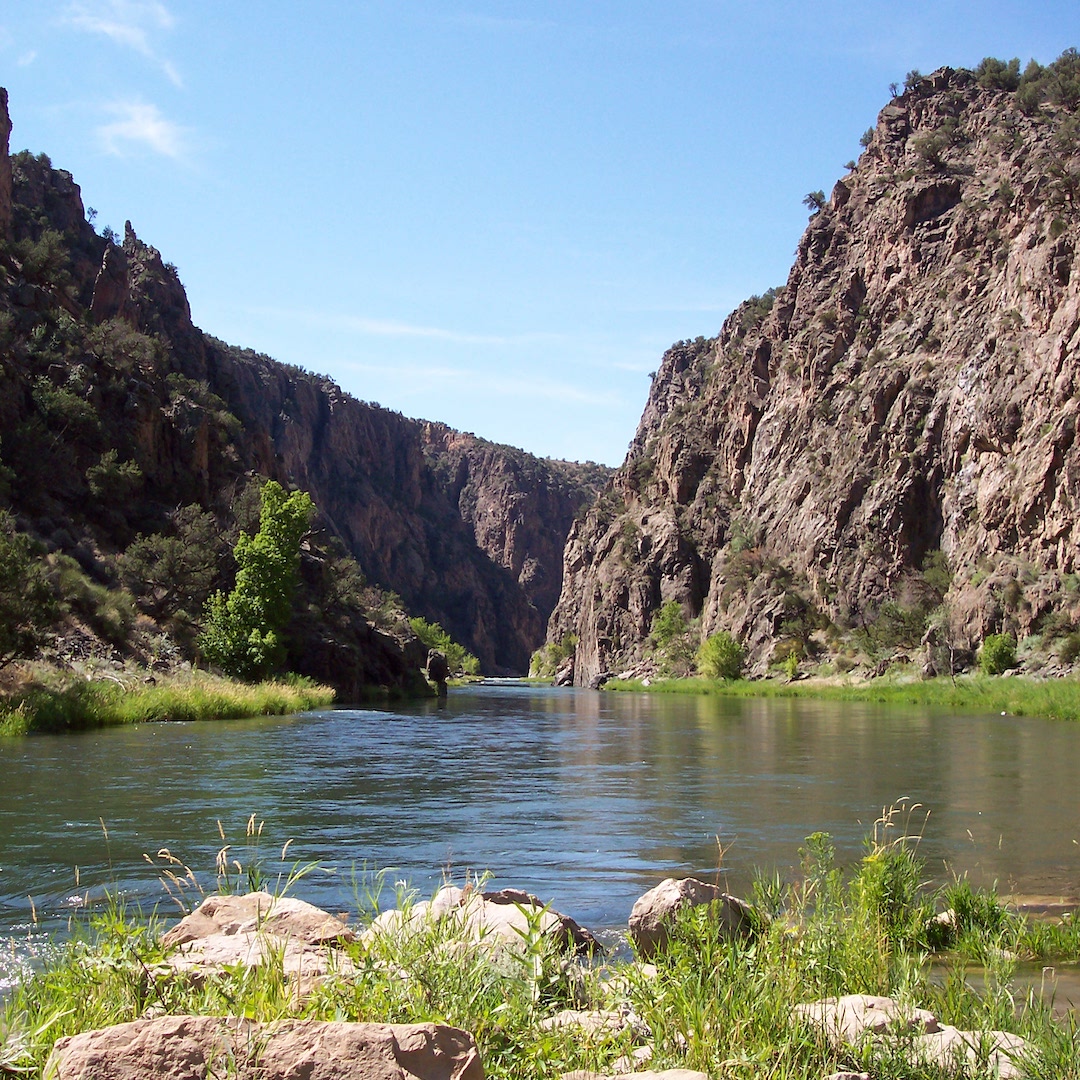
Arkansas River water levels in 2026 are running below historical averages, but that doesn’t mean the season is a wash. Thanks to the dam-controlled river system and the Voluntary Flow Management Program, Wilderness Aware is planning a full May-September season with trips for every experience level. Here’s what you need to know about snowpack, river flow, and the best months to book your trip.
2026 Arkansas River Snowpack: What It Means for River Flow
Colorado snowpack is the engine behind the Arkansas River’s annual flow cycle. As mountain snow accumulates through winter, it acts as a natural reservoir, releasing water gradually into the river basin as temperatures rise in spring and early summer. In 2026, Colorado snowpack finished the winter at historically low levels, with most mountain areas reporting less than 50% of normal averages, according to the Natural Resources Conservation Service.
For Arkansas River flow near Salida and Buena Vista, this means an earlier and shorter peak runoff window. Instead of flows cresting in mid-June (as in a typical year), the 2026 Arkansas River flow forecast calls for peak levels arriving in late May, followed by a faster drop into summer. Streamflows at the Wellsville Gauge are projected at roughly half of median for much of the season.
Key Advantage: Unlike free-flowing rivers across Colorado, the Arkansas River is bolstered by Pueblo Reservoir and Twin Lakes Reservoir upstream. These structures store water and release it strategically, extending the rafting season well beyond what snowpack alone could support. |
The result: while rivers like the Yampa, Eagle, and Blue may face dramatically shortened seasons in 2026, the Arkansas remains Colorado’s most reliable commercial rafting river from late April through late September.
The Voluntary Flow Management Program
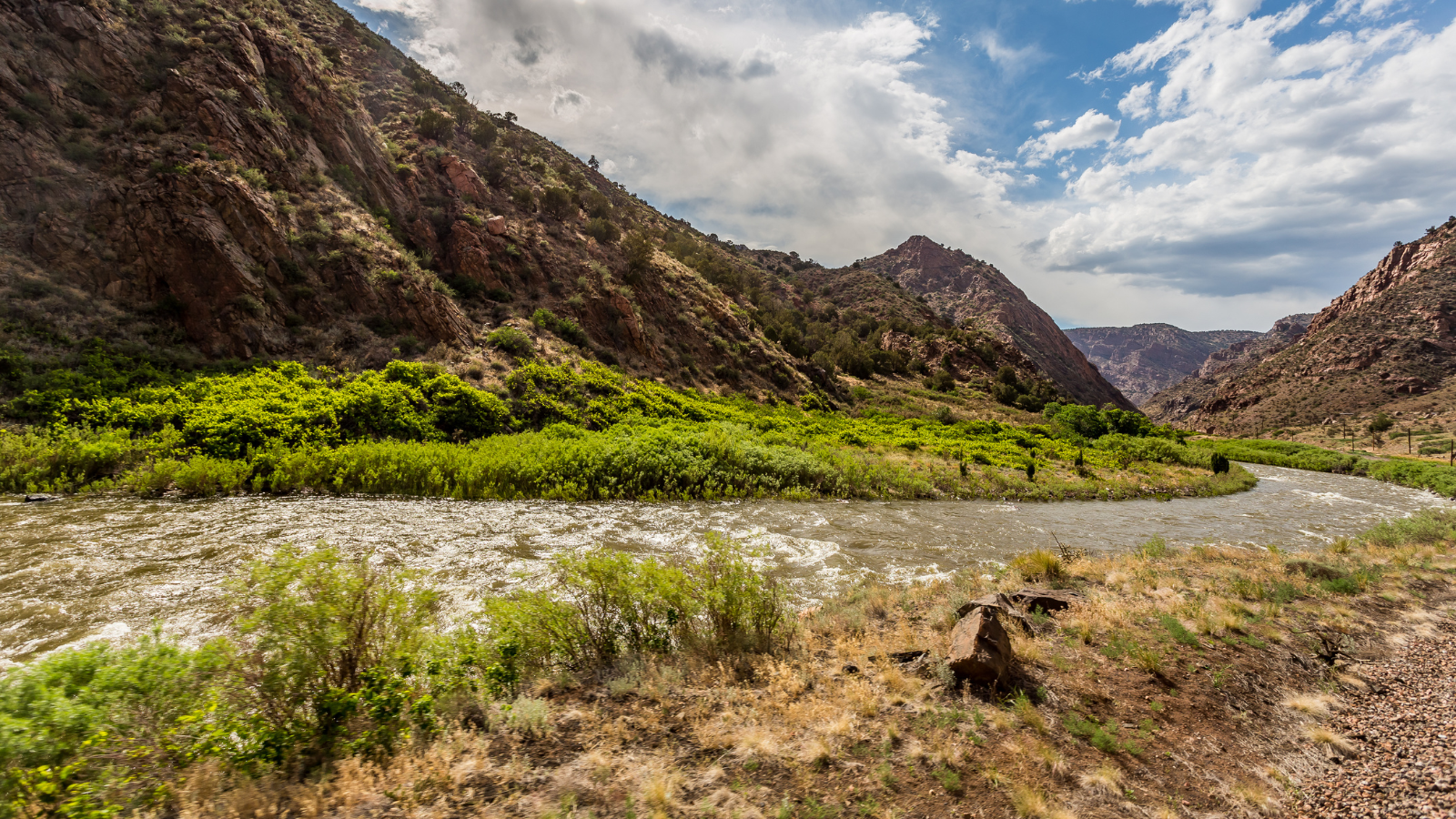
The Voluntary Flow Management Program is an industry-coordinated initiative that supplements the river with targeted reservoir releases, maintaining a minimum of 700 CFS at the Wellsville Gauge from July 1 through August 15. It keeps Browns Canyon and family trips operational through the heart of summer, even in low-snowpack years like 2026. Think of it as a safety net that extends the Arkansas rafting season well beyond what mountain snow alone could support.
Could El Niño Boost Arkansas River Flow This Summer?
Here’s some good news hiding in the 2026 forecast. Colorado summers bring afternoon thunderstorms through July and August, a season locals call the monsoon. This year, forecasters are calling for a stronger and more active monsoon than usual, which means more frequent afternoon rain across the mountains above the Arkansas River. That rain feeds directly into the river and can push water levels noticeably higher during the months that typically run lowest.
Think of it as a natural top-off. Even if spring snowpack was thin, a wet July and August can keep rapids lively and flows consistent well into late summer. Wilderness Aware’s guides track conditions daily, so if the monsoon delivers, you may step onto the water and find more whitewater than you were expecting, in the best possible way.
Lower Water Doesn’t Mean a Lesser Trip
If you’ve never rafted before, you might assume less water means less fun. It’s actually the opposite. When the river runs lower, more rocks, ledges, and drops become visible, and your guide has to navigate around and through them. That precision is what makes lower-water rafting feel so engaging.
At higher flows, the river moves fast and covers everything in big waves. At lower flows, you see the river working. Your guide reads each rapid before you hit it, positions the raft, calls out paddle strokes, and threads you through features that are unique to that day’s water level. Guests often say it feels more hands-on, like you’re actually part of making the trip happen.
Lower water is also genuinely safer, especially for first-timers. The current is calmer, the rapids are more predictable, and if anyone goes for an unplanned swim, getting back to the raft is straightforward. Our guides are trained for every water level on the Arkansas, and they’ll match your group to a trip that fits, whether you’re looking for a gentle family float or something with a little more splash.
Best Months to Raft the Arkansas River by Experience Level
Not all flows are created equal, and neither are rafters. Arkansas River water levels shift significantly from April through September, creating distinct windows that favor different skill sets. Use this guide to match your group to the right month.
Month | Approx. CFS (Salida) | Beginner / Family | Intermediate | Advanced |
|---|---|---|---|---|
April | 300–800 CFS | Limited — Milk Run only | Browns Canyon (early) | Numbers (if flows allow) |
May | 800–2,500 CFS | Lower Browns / Milk Run ✓ | Browns Canyon ✓✓ | Numbers / Royal Gorge ✓ |
June | 1,500–4,000+ CFS* | Lower Browns / Milk Run ✓ | Browns Canyon ✓✓ | Numbers / Royal Gorge ✓✓ |
July | 700–1,800 CFS | All family trips ✓✓ | Browns Canyon ✓✓ | Royal Gorge / Numbers ✓ |
August | 500–1,000 CFS | Best month for families ✓✓ | Browns Canyon ✓✓ | Royal Gorge (technical) ✓ |
September | 400–800 CFS | Milk Run / Lower Browns ✓ | Browns Canyon ✓ | Royal Gorge (scenic) ✓ |
* June CFS can vary significantly in high vs. low snowpack years. In 2026, expect flows on the lower end of the June range. CFS figures are approximate and based on historical Wellsville Gauge data.
April: Early Season — Advanced Rafters Only
Arkansas River flow in April is driven almost entirely by residual snowpack melt and overnight temperature swings. In 2026, with reduced mountain snowpack, early season flows near Salida may range from 300 to 800 CFS. Wilderness Aware offers limited early-season trips for experienced groups when conditions allow. The Numbers section may run during brief high-flow windows, while Browns Canyon opens as flows build.
May: High Water Arrives — Best for Intermediate to Advanced
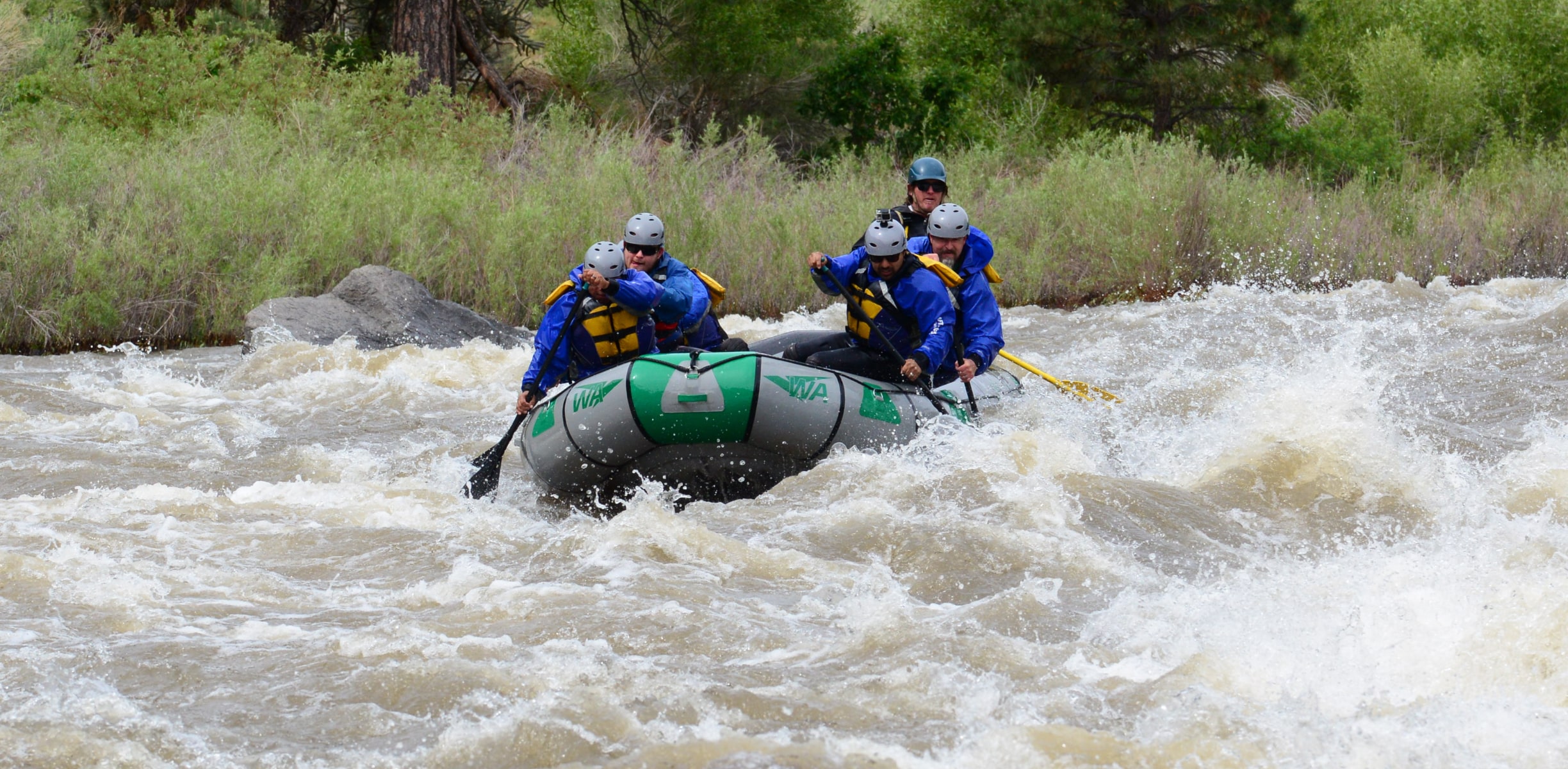
May marks the start of Arkansas River peak season as snowmelt accelerates. In 2026, this peak is arriving earlier than usual, potentially by mid-to-late May, making it the prime window for thrill-seekers before flows begin to drop. Browns Canyon runs powerfully; the Numbers and Royal Gorge sections offer their most dynamic conditions of the year. Beginners can join the Lower Browns and Milk Run trips safely, though guides will manage groups carefully on faster water.
June: Peak Season — All Levels, Higher Adventure
In a normal year, June is prime-time on the Arkansas. In 2026, expect flows to settle into a moderate range by early June. This is still excellent rafting for all experience levels. The Royal Gorge remains dramatic; Browns Canyon hits its sweet spot for families wanting some splash without extreme conditions. Monitor Arkansas River flow forecasts closely in June, as conditions can shift week to week.
July: Ideal for Families and Beginners — Flows Stabilize
July is Wilderness Aware’s busiest month, and for good reason. The Voluntary Flow Management Program kicks in July 1, supporting consistent flows through August 15. Temperatures are warm, crowds are enthusiastic, and the full trip menu is available. Book our family rafting trips early, as July weekends fill fast.
August: Best Month for Families — Warm Water, Friendly Flows
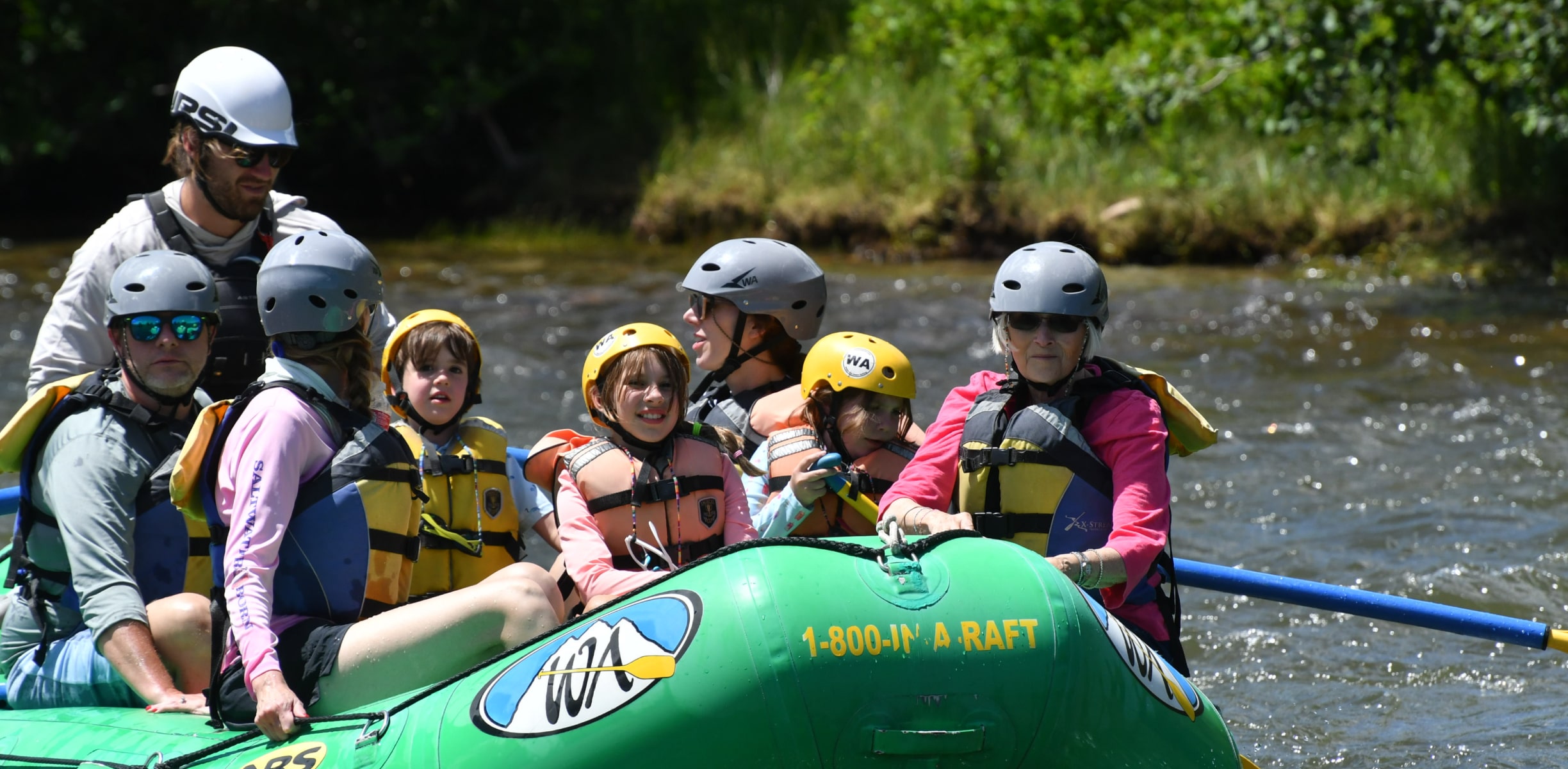
Arkansas River water levels in August typically settle into a comfortable range, still enough for exciting rapids but calmer and more predictable than peak runoff. Water temperatures are at their warmest. The Milk Run (ages 4+), Lower Browns Canyon, and full Browns Canyon Half-Day trips are all excellent choices. Advanced rafters can still find challenge in the Royal Gorge, which remains technical even at moderate flows.
September: Shoulder Season — Scenic, Mellow, Uncrowded
September is the hidden gem of Arkansas River rafting. Flows settle into their lowest point of the year, but all primary sections remain operational. Browns Canyon, Bighorn Sheep Canyon, and the Royal Gorge all offer runnable conditions. Crowds disappear. Aspens begin to turn gold along the canyon walls. The experience shifts from adrenaline to scenery. For groups seeking a peaceful, uncrowded float, September is the answer.
Book Early: Even in lower water years, popular departure times fill up fast, especially in July and August. Wilderness Aware recommends booking at least 2-3 weeks in advance for summer weekends. |
How to Track Arkansas River Water Levels in Real Time
Arkansas River water levels are measured continuously at multiple gauge stations along the river corridor. These are the most reliable sources for rafters planning a trip:
USGS Arkansas River near Nathrop — the primary upper-basin gauge between Buena Vista and Salida
Colorado DWR Wellsville Gauge — the official Arkansas River flow Salida benchmark used by the Voluntary Flow Management Program
Colorado Parks & Wildlife Arkansas Headwaters Recreation Area — waterflow page tracks VFMP target vs. actual CFS with historical context
NOAA Northwest River Forecast Center — Arkansas River at Salida stage and flow forecast
Wilderness Aware’s guides monitor Arkansas River flow conditions daily and adjust trip offerings based on current and forecast levels. When in doubt, call us at 1-800-462-7238 — our team can tell you exactly what’s running and which trips are best suited for your group.
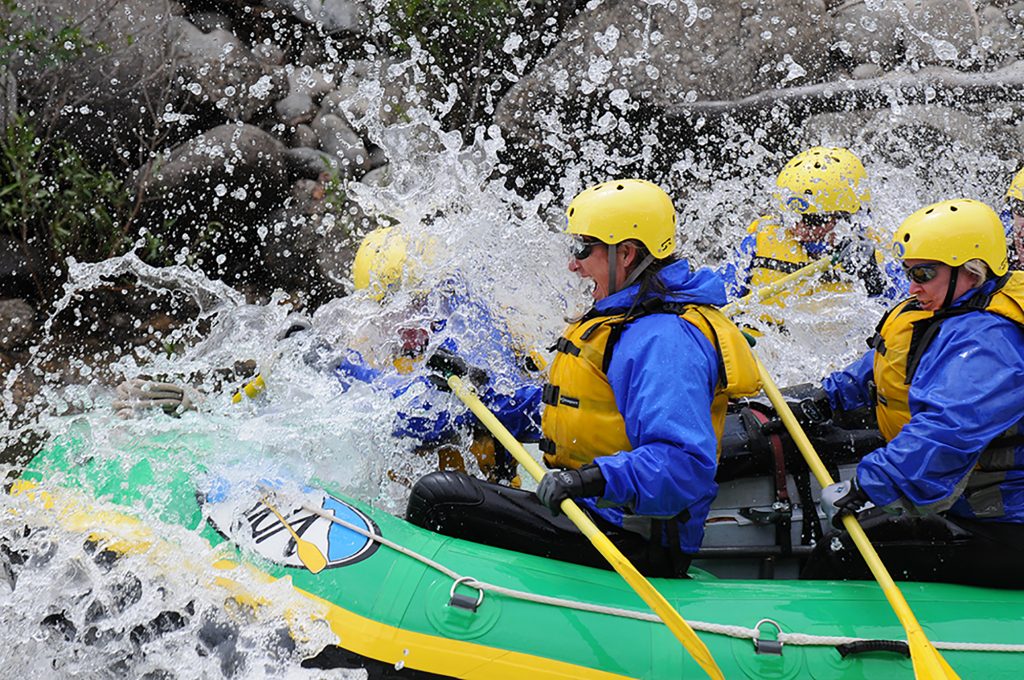
Why the Arkansas River Is Colorado’s Most Reliable Rafting Destination
The Arkansas River is raftable across a remarkably wide flow range, from roughly 300 CFS to well past 3,000 CFS. That’s not an accident. Several structural factors make the Arkansas uniquely resilient:
Dam regulation: Pueblo Reservoir and Twin Lakes Reservoir store water upstream and release it throughout the season, decoupling river flow from daily weather swings
Large drainage basin: The Arkansas drains a vast, high-elevation watershed with snow accumulating at multiple elevations, spreading runoff over weeks rather than days
Voluntary Flow Management Program: Industry coordination ensures minimum recreational flows through peak summer
150 miles of raftable corridor: From the Numbers above Buena Vista to Bighorn Sheep Canyon below Canon City, the Arkansas offers more variety than any other river in Colorado
Whether flows are high and powerful or lower and technical, Wilderness Aware’s experienced guides adapt, and the river delivers an unforgettable experience either way.
Ready to Get on the Water?
Arkansas River water levels in 2026 are lower than average, but Wilderness Aware is fully operational all season long. Browse all of our Arkansas River trips, from the family-friendly Milk Run to the bucket-list Royal Gorge, and book your spot before summer dates fill.